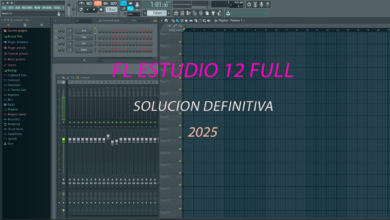
FL STUDIO FULL 2025 – RELEASED AND FEATURES
Sure. I provide you with a comprehensive guide to the “last version” of FL Studio 2025, based on the latest information, the management patterns of Image-Line and what the community expects.
Important: To date (June 2024), FL Studio 2025 has not been officially released. Its official launch is scheduled for spring (May) 2025. Image-Line is currently in the phase of public beta testing.
However, we can predict with great precision its characteristics and requirements.
Expected features of FL Studio 2025 (Last Version)
These are the most anticipated features, many of which are already being tested in beta versions:
1. Native Support for Apple Silicon (M1/M2/M3)
-
The most important feature. FL Studio will no longer need the “Rosetta 2” translation software on modern Macs.
-
Benefit: Increased performance, lower use of CPU and better battery life in MacBooks.
2. Performance and Stability Improvements
-
General optimization of the audio engine to make the most of the new hardware (CPU of latest cores, NVMe disks, etc.).
-
Less falls and more efficiency with very large projects.
3. New Plugins and Instruments
-
Image-Line always includes new generators and effects with each main version. We’re likely to see:
-
A new flagship synthesizer or a larger one update (e.g. Sytrus.
-
New sound packs for FLEX.
-
Improvements in Patcher, Gross Beat or Effector.
-
4. Improvements in the Work Interface and Flow (Workflow)
-
Topics and Customization: More options to customize the appearance of the DAW (skins, colors, icons).
-
Windows Management: Better management of open plugin windows.
-
Playlist and Mixer: Small usability enhancements, such as better comping tools (move edition) or track grouping.
5. Integration of AI (Artificial Intelligence)
-
They are likely to follow in the footsteps of other DAWs and integrate AI tools to:
-
Mezcling assistance: Smart automatic mastery, equalization suggestions.
-
Generation of Ideas: Creating melodies, harmonies, or rhythms based on AI.
-
Dear System Requirements for FL Studio 2025
Requirements don’t usually change drastically, but the native version for Apple Silicon is a big leap. Here’s an estimate based on current requirements and trends.
Minimum Requirements (Estimated)
-
Operating system:
-
Windows: 10 or 11 (64-bit)
-
macOS: 12 (Monterey) or higher (for native Silicon support)
-
-
CPU: 4-core processor with AVX support (Intel or AMD).
-
RAM: 8 GB (Recommended 16 GB for large projects).
-
Disc space: 4 GB of free space ( recommended SSD).
-
Screen: Resolution of 1366×768 or higher.
-
Sound Card: Controller compatible with ASIO (Windows) or CoreAudio (macOS). Recommended: a dedicated audio interface.
Recommended requirements (For professional production)
-
Operating System: Windows 11 / macOS 14 (Sonoma) or above.
-
CPU: 8 core or higher processor (Intel i7/i9, AMD Ryzen 7/9, Apple M-series).
-
RAM: 16 GB or more (32 GB for orchestration or projects with many samples).
-
Storage: NVMe SSD fast (1 TB or more). An additional SSD for sound libraries.
-
Screen: Multiple monitors or an ultra-wide monitor (1440p or 4K).
-
Sonio card: High-quality USB audio interface (of Focusrite, Universal Audio, MOTU, etc.).
Frequently Asked Questions
1. When will FL Studio 2025 come out?
-
Answer: The official launch is scheduled for spring 2025 (around May). Public beta is active now.
2. Will I have to pay again?
-
Answer: NO. FL Studio has free lifelong updates. If you buy any version today (Fruity, Producer or Signature), you will receive FL Studio 2025 free when it launches.
3. Where can I download the beta?
-
Answer: At the Official Image-Line Forum in the section “FL Studio Beta (Win/Mac).” DAYTENCE. Use betas just to try, never for important projects, as they can be unstable.
4. What version do I buy now?
-
Answer: Producer Editing is the ideal point for most users. If you can afford it, the Signature Bundle includes valuable plugins like Gross Beat, Vocodex and NewTone.
Conclusion
FL Studio 2025 is profiled as a focus on native performance on Mac and continuous improvements in stability and workflow. Do not expect a complete revolution, but a powerful and much-needed evolution.
The best strategy is to buy FL Studio now (if you don’t already have it) to secure your license and receive the update at 2025 for free when it’s ready. In the meantime, you can learn the 21st version, which is already an incredibly powerful and professional DAW.
1. Current Requirements: FL Studio 21 (Stable version)
These are the official Image-Line requirements for the latest stable public version.
Minimums:
-
Operating System: Windows 10 or later (64-bit) / macOS 11 (Big Sur) or later.
-
CPU (Processor): Processor with 64-bit architecture compatible with AVX (Intel or AMD).
-
RAM: 4 GB of RAM (8 GB or more recommended).
-
Disk space: 4 GB of free space for installation.
-
Screen: Resolution of 1366×768 or higher.
-
Audio Controller: Controller compatible with ASIO (Windows) or CoreAudio (macOS).
Recommended (For professional production):
-
Operating System: Windows 11 / macOS 14 (Sonoma) or later.
-
CPU (Processor): 8 core or higher processor (Intel i7/i9, AMD Ryzen 7/9, Apple M-series).
-
RAM: 16 GB or more (32 GB for orchestration or projects with many heavy samples and libraries).
-
Storage: NVMe SSD fast (1 TB or more). An additional SSD only for sound libraries is ideal.
-
Screen: Multiple monitors or an ultra-wide monitor (1440p or 4K) to have more workspace.
-
Audio Card: An external USB audio interface of quality (Focusrite, Universal Audio, MOTU, etc.) with dedicated ASIO drivers (in Windows).
2. Requirements Esperanted: FL Studio 2025 (Next Version)
Important: FL Studio 2025 has not been officially released (predicted for spring 2025). These requirements are a projection based on trends and expected characteristics.
Minimums (Estimated):
-
Operating system:
-
Windows: 10 or 11 (64-bit) (no change).
-
macOS: 12 (Monterey) or above (to ensure full support for Apple Silicon chips).
-
-
CPU: 4-core processor with AVX support (equal now, but with native support for Apple M1/M2/M3).
-
RAM: 8 GB (the recommended minimum is expected to rise slightly).
-
Disk space: 4-6 GB of free space (can be increased with new plugins and libraries).
-
Screen and Audio: No significant changes.
Recommended (Estimated):
-
The recommended requirements will be almost identical to those of FL Studio 21.
-
The big difference will be for Mac users: a Mac with Apple Silicon chip will see a huge jump in performance and efficiency when running FL Studio natively, without the need for Rosetta.
Table Summary of Requirements
| Component | FL Studio 21 (minimum) | FL Studio 21 (Recommended) | FL Studio 2025 (Estimated) |
|---|---|---|---|
| Operating System | Win 10th / macOS 11th. | Win 11 / macOS 14th. | Win 10th / macOS 12th. |
| CPU (Processor) | 64-bit with AVX | 8th core (Intel/AMD/M-series) | – Apple Silicon Native Support |
| RAM | 4 GB | 16 GB. | 8 GB (minimum) / 16 GB (Rec.) |
| Storage | 4 GB (HDD/SSD) | NVMe SSD (1TB) | NVMe SSD (1TB) |
| Graphics | 1366×768 | 1440p/4K (multiple monitors) | No changes |
| Audio | Compatible with ASIO/CoreAudio | Interface of External Audio | No changes |
Key Points to Remember:
-
Free Lifetime Updates: If you buy FL Studio now, you’ll get FL Studio 2025 free when it’s released.
-
The Mac difference: The biggest change in requirements will be for Mac. If you have a Mac with Apple Silicon chip, FL Studio 2025 will be a crucial update for you.
-
Requirements do not go up drastically: Don’t expect a PC now running FL Studio 21 without problems to be compatible with version 2025. The focus is on optimization, not on increasing the load.
Conclusion: If your team meets the recommended requirements for FL Studio 21, you are in an excellent position for FL Studio 2025 and beyond.